
Blog Details
Breast implants have become quite a common name in the surgical industry. To change in appearance, one can thus, easily rely on breast implants. Breast implants nudge your self-esteem and make you feel beautiful about yourself.
However, there are certain risk factors involved in the procedure. Amidst, the most common one is breast augmentation capsular contracture. Therefore, it is better to understand what breast augmentation is, and what the complications that it can bring about.
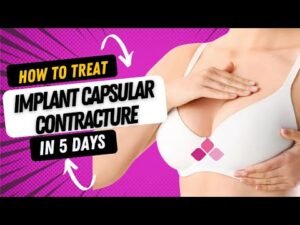
A Brief Introduction to Breast Augmentation
Breast augmentation is a surgical procedure, better known as enlargement or augmentation mammoplasty. It is meant to physically enhance the size and shape of women’s breasts. This is usually performed by inserting implants, either filled with silicone gel or a saltwater solution. It is generally used to enhance the volume and symmetry of the breasts, often correcting asymmetry naturally present or induced due to size changes post-childbirth or weight fluctuation.
The surgery typically will involve making an incision along one of several possible locations: the breast, around the nipple, or in the armpit through which the implants are placed. Implants are inserted either directly under the breast tissue or beneath the chest muscle, depending on desired results and individual anatomy.
Understanding the Complications of Breast Augmentation
1. Capsular Contracture
Breast augmentation capsular contracture is the condition where scar tissue, gets developed around an implant. In other words, a capsule tightens and becomes firm. Consequently, the breast feels firm and often looks distorted. In the more serious cases, it may also result in pain, which is not successfully treated except through surgical extraction or the change of the implant.
2. Implant Rupture and Leakage
Implants are not designed to last a lifetime. Over time, due to one or more possible reasons like trauma or wear and tear, they can rupture. A rupture can lead to leakage of its contents into the surrounding tissue. Silicone implants can also cause a silent rupture where overt symptoms may not be noticed until it is diagnosed on imaging. More often than not when saline implants rupture, they deflate visibly. Early ruptures can be detected and treated through regular follow-up visits and imaging.
3. Alteration in the Sensation of the Nipple
The common complications of the surgery include numbness or loss or change in nipple sensation. This may involve hypersensitivity, hyposensitivity, or total numbness; it may be due to impaired nerves or tissue alteration. In many cases, sensation often returns to normal with time, while for other patients, their sensation may remain changed.
4. Asymmetry of the Breasts
Although surgeons try to achieve symmetry, it is often less than perfect. This is most true about post-surgery features, which can be related to natural breast shape, implant position, and body healing. In such cases, this might further involve other procedures to rectify noticeable asymmetry to achieve your desired look.
5. Rippling and Wrinkling
It can be seen that some folds or wrinkles of the implant may be visible under the skin, especially in those with a paucity of native breast tissue. This could also relate to implant placement, size, and type of implant utilized. Rippling is more common with saline implants and may sometimes be improved with revision of the implant or using a different type of implant.
Treatments that can Help you to Overcome Breast Augmentation Complication
Importance of Ultrasound Therapy
Ultrasound can play an important role as a treatment for breast augmentation capsular contracture. It is a non-invasive therapy, using high-frequency sound waves, offers deep tissue penetration, and can be useful in resolving several post-surgical complications.
● One of the major benefits of ultrasound therapy is the facilitation and enhancement of the flow of blood, which accelerates the healing of tissues.
● Improved blood flow helps in absorbing any extravasated fluid or hematomas that are likely to form post-surgery.
● It can hence greatly minimize swelling and accelerate recovery.
Importance of Massage Therapy
Massage therapy may form a very effective form of breast capsular contracture treatment. If appropriately applied, a variety of postsurgical massage techniques can help in combating most issues.
● One of the most important advantages of massage therapy concerning this is its preventive and therapeutic role in capsular contracture, a condition where scar tissue around the breast implant becomes tight and hard.
● Indeed, regular, light massage is very important to keep the capsule around the implant soft and pliable; thus, this complication is less likely to appear, and aesthetic results from augmentation are improved.
● Massage promotes post-surgical swelling and bruising, as it provides great efficiency in lymphatic drainage and blood flow.
NOTE: There are invasive treatments too that involve correction surgery.
| Complications | Treatment Price Range |
| Capsular Contracture | $2000-$5000 |
| Implant Rupture | $3000-$6000 |
| Infection | $1000-$4000 |
| Hematoma and Seroma | $1500-$5000 |
FAQs
1. What are the common breast implants?
The most common types of breast implants are gel and saline.
2. How long will it take for breast augmentation surgery?
Usually, it takes 1-2 hours for breast augmentation surgery.
3. What leads to capsular contracture?
When the tissue around your breast implant hardens, it can lead to capsular contracture. It can also cause extreme pain, and can even lead to distorted breast shapes.
4. How can you understand capsular contracture?
You may experience pain. But for a better understanding, you will need to contact your surgeon and be under proper physical examination.
5. How long will the breast implants last?
Breast implants can last 10-15 years. However, it depends upon your maintenance, not just physical fitness but also your diet. For instance, you will need to get rid of your smoking habit.
6. Can you replace your breast implants?
Yes, you cannot just replace your breast implants, you can even remove them if you want. But it will involve revision surgery.
7. Will insurance cover capsular contracture treatment?
The coverage will vary as per your insurance plans. If your medical plans demand coverage, then it might.
Final Words!
Breast implants will always have a risk factor, but they also come up with successful treatments. It is up to you, to which treatment you might follow. Therefore, make sure to contact your surgeon to learn about the best breast capsular contracture treatment.